
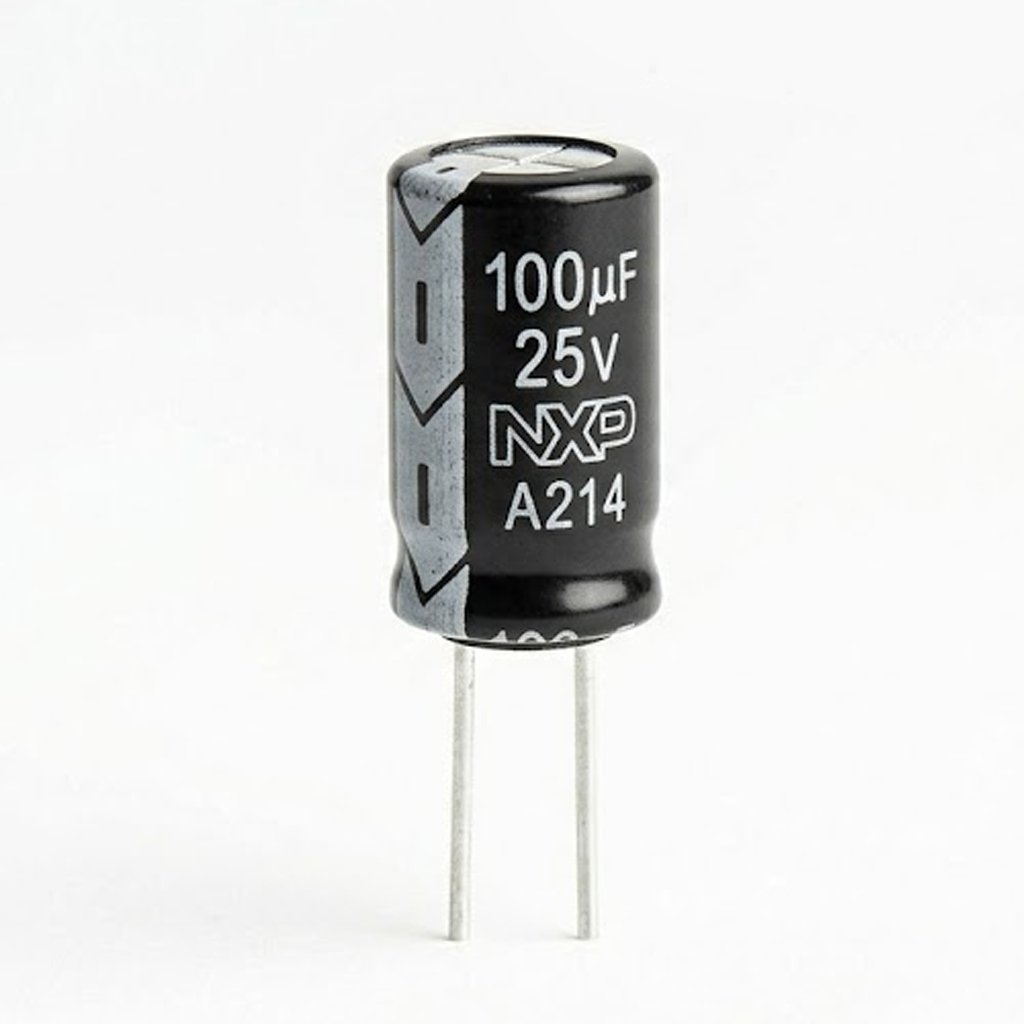
Capacitor (Electrolytic 100µF / 25V)
Passive Components
Part Number / SKU: Electrolytic Capacitor 100µF 25V
📋 Technical Specifications
Type: Electrolytic Capacitor
Capacitance: 100µF
Voltage Rating: 25V
Tolerance: ±20%
Polarity: Polarized (Positive & Negative)
Mounting: Through Hole
Temperature Range: -40°C to +105°C
🔹 Capacitor क्या है?
Capacitor एक ऐसा component है जो electric charge store करता है और जरूरत पड़ने पर release करता है।
🔹 100µF Capacitor किस काम आता है?
👉 यह medium-high value capacitor है
👉 ज्यादा smooth filtering और delay के लिए use होता है
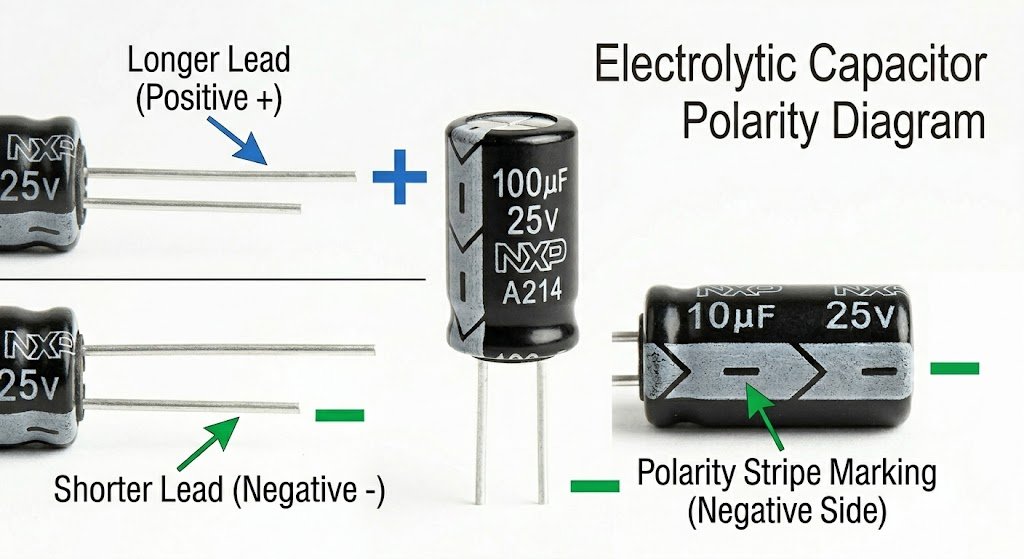
🔹 Polarity (बहुत जरूरी ⚠️)
लंबी pin → Positive (+)
छोटी pin → Negative (–)
Body पर stripe → Negative
👉 उल्टा लगाने पर capacitor खराब या burst हो सकता है
🔹 100µF / 25V का मतलब
100µF → ज्यादा charge store करेगा (10µF से 10 गुना ज्यादा)
25V → इससे ज्यादा voltage नहीं देना
🔹 यह क्या काम करता है?
Power supply smooth करता है
Voltage fluctuations कम करता है
Delay circuits में time बढ़ाता है
Audio filtering में use
🔹 कहाँ use होता है?
Power supply filtering
555 timer circuits (slow blinking)
Amplifier circuits
Sensor stabilization
DIY electronics projects
🔹 10µF vs 100µF (difference)
10µF → fast response
100µF → slow & stable response
👉 इसलिए blinking slow करनी हो → 100µF use करो
🔹 Important Tips
हमेशा polarity check करो
Voltage limit cross मत करो
सही value चुनो (project के हिसाब से)
🔹 What is a Capacitor?
A capacitor stores electrical energy and releases it when required.
🔹 What is 100µF Capacitor used for?
Higher capacitance → more energy storage
Used for smoothing and delay
🔹 Polarity
Long leg → Positive
Short leg → Negative
Stripe → Negative
⚠️ Wrong connection may damage or burst the capacitor
🔹 Meaning of 100µF / 25V
100µF → Capacitance (higher storage)
25V → Maximum voltage limit
🔹 Functions
Power supply smoothing
Voltage stabilization
Delay circuits
Audio filtering
🔹 Applications
555 timer circuits
Power filtering
Amplifiers
DIY electronics
🔹 Tips
Always check polarity
Do not exceed voltage
Choose correct value